
The free certification initiative led by the European Space Foundation aims to become a transformative opportunity for driven individuals aspiring to shape the future of space and robotics. The SpaceCert confirms young participants’ hands-on experience and gives industry-recognition, boosting their career prospects. For companies, it’s a chance to connect with skilled, motivated talent ready to innovate in space and robotics, benefiting both the workforce and industry’s future. The project is co-funded by the European Union.
Born from the European Rover Challenge, the flagship project of the European Space Foundation, SpaceCert recognizes excellence in space and robotics, connecting participants with global industry expertise.
The project aims to strengthen the employability of the youth that wish to start their career in the developing industries connected to STEM, space, and robotics by providing them with an industry-recognized certification system acknowledging their skills, increasing their competitiveness on the labour market & equalizing their chances regardless of their economic status. It plans to shape the future generations of young engineers to meet the industry needs in an innovative and practical project.
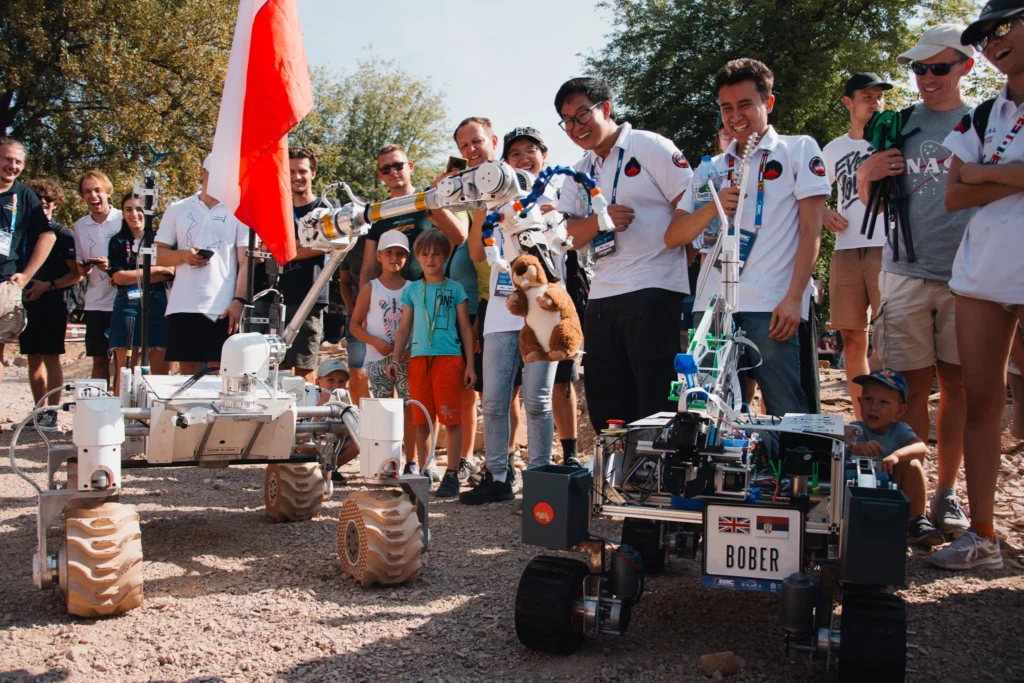
The project activities include the development of a digital certification platform in cooperation with independent professionals from the industry, and production of a 'syllabus' together with industry experts to provide candidates with dynamic & modular certification to accompany the team project assignment during the ERC robotics competition. It also assumes multi-channel promotional activities to raise awareness of the project in young EU residents with a STEM background & academia.

The project results include the certification of 1.200 participants that successfully complete the team project assignment as part of European Rover Challenge competition, and get positive evaluation from the independent jury of industry professionals providing them with a unique advantage on the labour market in the EU space sector. The project allows participating companies from the EU space sector to directly influence the quality of newcomers in the industry and their skillset.
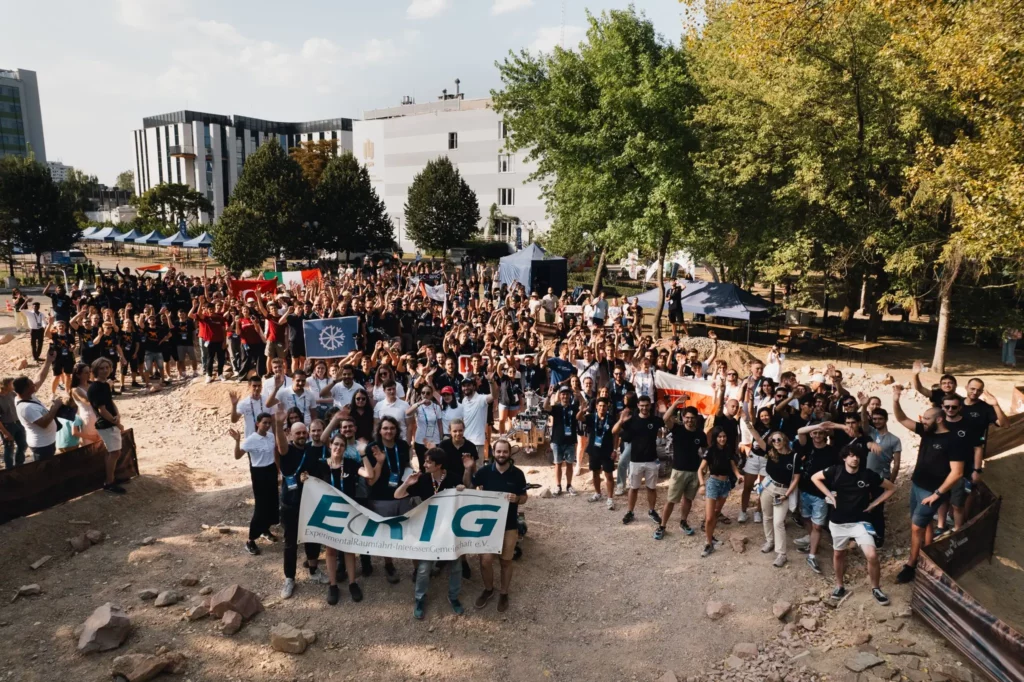
Project results:
Across the 2025 and 2026 on-site editions of the European Rover Challenge, SpaceCert transformed practical project experience into a verifiable record of skills developed in space and robotics.
Certification totals include participant records with at least one assigned SpaceCert module.
Development:
The second project year did not simply certify more people — it captured a broader set of competencies for each participant.
Between 2025 and 2026, the number of certified participants grew by 4.5%, while the number of awarded competency modules increased by 26.2%.
Competencies:
The certification reflects the multidisciplinary structure of rover projects: engineering, science, project management, procurement and communications are recognised within one modular framework.
The strongest concentration was in the disciplines at the technical core of rover development. Counts below combine Junior, Mid and Senior levels across both on-site editions.
International cooperation:
SpaceCert operated inside a strongly international academic environment. In both editions, 20 of 25 on-site teams represented institutions outside Poland, while the 2026 field alone represented 28 academic institutions.
Country statistics refer to the team / academic institution represented at ERC and should not be interpreted as participant nationality.
Impact:
original target → participants certified
The Erasmus+ project set out to certify 1,200 European Rover Challenge participants. Across the 2025 and 2026 on-site editions, 1,399 participants received at least one SpaceCert competency module — 199 more than originally planned.
The SpaceCert is not just a digital diploma. By turning one’s achievements at the ERC into an industry-recognized credential, this certification propels a career while shaping the future of innovation. What are the main characteristics of the SpaceCert?
By partnering with us, your organization becomes a key contributor to a global initiative that promotes equal opportunities, nurtures talent, and expands access to STEM careers.
Play a direct role in preparing the next generation of space and robotics professionals, equipping them with practical skills, global perspectives, and the drive to innovate.
Certified participants have been rigorously evaluated and proven themselves in competitive, real-world scenarios. They bring practical experience, international collaboration skills, and a commitment to excellence.
The project “Space & robotics industry certification system increasing the employment value of the next generation of engineers” is executed as part of the ERASMUS+ 2024 Small-scale partnerships in youth (KA210-YOU). Learn more at the Erasmus+ Project Results Platform.
Co-funded by the European Union. Views and opinions expressed are however those of the author(s) only and do not necessarily reflect those of the European Union or the Foundation for the Development of the Education System (FRSE). Neither the European Union nor FRSE can be held responsible for them.

